

U.S. → Poland relocation guide · updated 2026-04-23
Moving to Poland from the United States
2026 guide to relocating from the United States to Poland — Zgłoszenie przesiedleńcze, KAS clearance, karta pobytu, PESEL, entry ports (Gdynia, Gdańsk, Świnoujście), transit times, and price ranges for Warsaw, Kraków, Gdańsk, and Wrocław.
At a glance
A standard U.S. → Poland household move takes 18–26 days end-to-end, typically costs $5,400 – $20,500, and clears through Krajowa Administracja Skarbowa (KAS) under Transfer of Residence with a Zgłoszenie przesiedleńcze. Gdynia and Gdańsk handle most U.S.-origin household containers.
- Transit time
- 18–26 days
- Typical range
- $5.4K – $20.5K
- Main entry port
- Gdynia · Gdańsk
- Core document
- Zgłoszenie przesiedleńcze
Documents required to move to Poland
Poland customs (Krajowa Administracja Skarbowa (KAS)) releases household effects duty- and VAT-free when the applicant qualifies under the Transfer of Residence (ToR) regime. The file below travels with the shipment and is reviewed by the destination clearance officer — missing or inconsistent paperwork is the single most common cause of hold inspections and storage fees.
- Required for every move
Zgłoszenie przesiedleńcze
Polish customs Transfer-of-Residence declaration. Used personal effects owned and used >6 months are duty- and VAT-free when the applicant is taking up residence in Poland.
- Required for every move
Valid passport + karta pobytu
Non-EU citizens need a residence card (karta pobytu) — temporary or permanent. EU/EEA citizens and returning Poles use a passport.
- Required for every move
PESEL or NIP
Polish national ID (PESEL) or tax number (NIP). Required on import declarations and for most daily-life steps in Poland.
- Required for every move
Zameldowanie (address registration)
Polish address-registration certificate from the local urząd gminy. Customs uses it to confirm the ToR category.
- Required for every move
Bill of lading / air waybill
Ocean BOL or air waybill matching the inventory.
- Required for every move
Detailed inventory in Polish and English
Itemized with PLN or EUR declared values. Alcohol, tobacco, and firearms are excluded from the ToR and declared separately.
Price ranges from the USA to major Poland cities
Ranges below cover full-service door-to-door moves from a major U.S. East Coast port, including export packing, ocean freight, destination customs brokerage under the ToR framework, and final-mile delivery anywhere in Poland. Quoted in USD. Use these as planning bands — final quotes depend on volume, access, parking restrictions, and season.
| Destination city | Transit | Studio / 1-BR | 2-BR household | 3-BR+ household | Typical U.S. origin |
|---|---|---|---|---|---|
| Warsaw(Masovian Voivodeship) | 18–24 days | $5,400 – $8,400 | $9,200 – $15,200 | $15,200 – $20,500 | Port of NY/NJ → Gdynia · road to Warsaw |
| Kraków(Lesser Poland Voivodeship) | 19–26 days | $5,500 – $8,500 | $9,300 – $15,400 | $15,400 – $20,800 | Port of NY/NJ → Gdynia · road to Kraków |
| Gdańsk(Pomeranian Voivodeship) | 18–24 days | $5,300 – $8,300 | $9,100 – $15,000 | $15,000 – $20,300 | Port of NY/NJ → Gdańsk · direct |
| Wrocław(Lower Silesian Voivodeship) | 19–26 days | $5,500 – $8,500 | $9,300 – $15,300 | $15,300 – $20,700 | Port of NY/NJ → Gdynia · road to Wrocław |
Estimates as of 2026-04-23. Add 5–10% for Stare Miasto (Old Town) deliveries in Warsaw, Kraków, or Gdańsk where pedestrian zones and narrow cobblestone streets require a shuttle.
Major Poland destinations we serve
Polish routings favor direct Baltic discharge at Gdynia or Gdańsk. Hamburg via T1 transit is a secondary option for southern or southwestern Poland when sailing schedules prefer it.
Warsaw · Masovian Voivodeship
Capital and largest Polish metro. Loads discharge at Gdynia or Gdańsk and truck 4 hours south to Warsaw. Śródmieście deliveries occasionally need a shuttle.
- Transit
- 18–24 days
- 2-BR range
- $9,200 – $15,200
Origin lane: Port of NY/NJ → Gdynia · road to Warsaw
Kraków · Lesser Poland Voivodeship
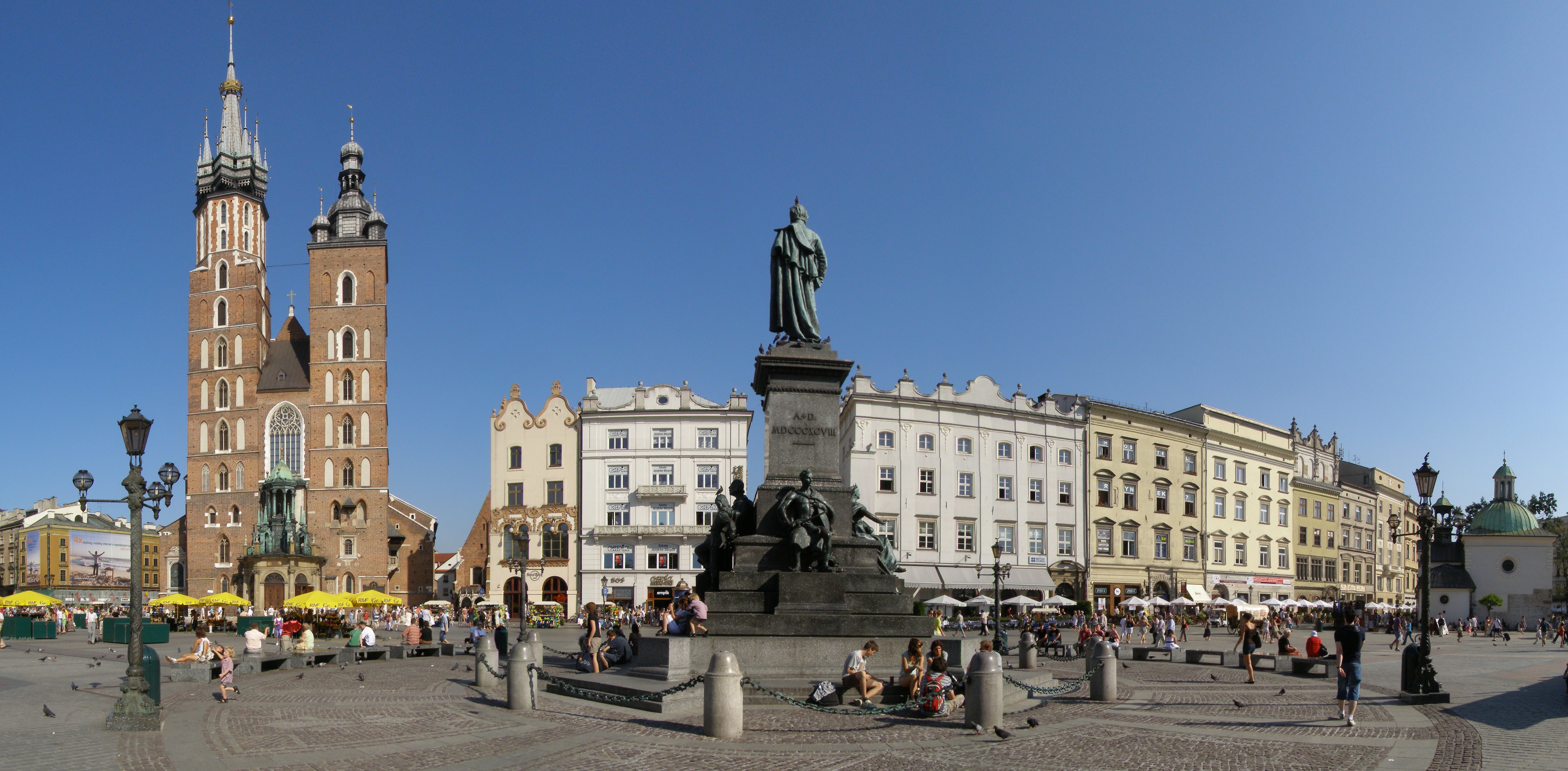
Southern cultural capital. Loads discharge at Gdynia and truck 7 hours, or via Koper (Slovenia) for West-Coast U.S. origins. Stare Miasto requires a shuttle.
- Transit
- 19–26 days
- 2-BR range
- $9,300 – $15,400
Origin lane: Port of NY/NJ → Gdynia · road to Kraków
Gdańsk · Pomeranian Voivodeship
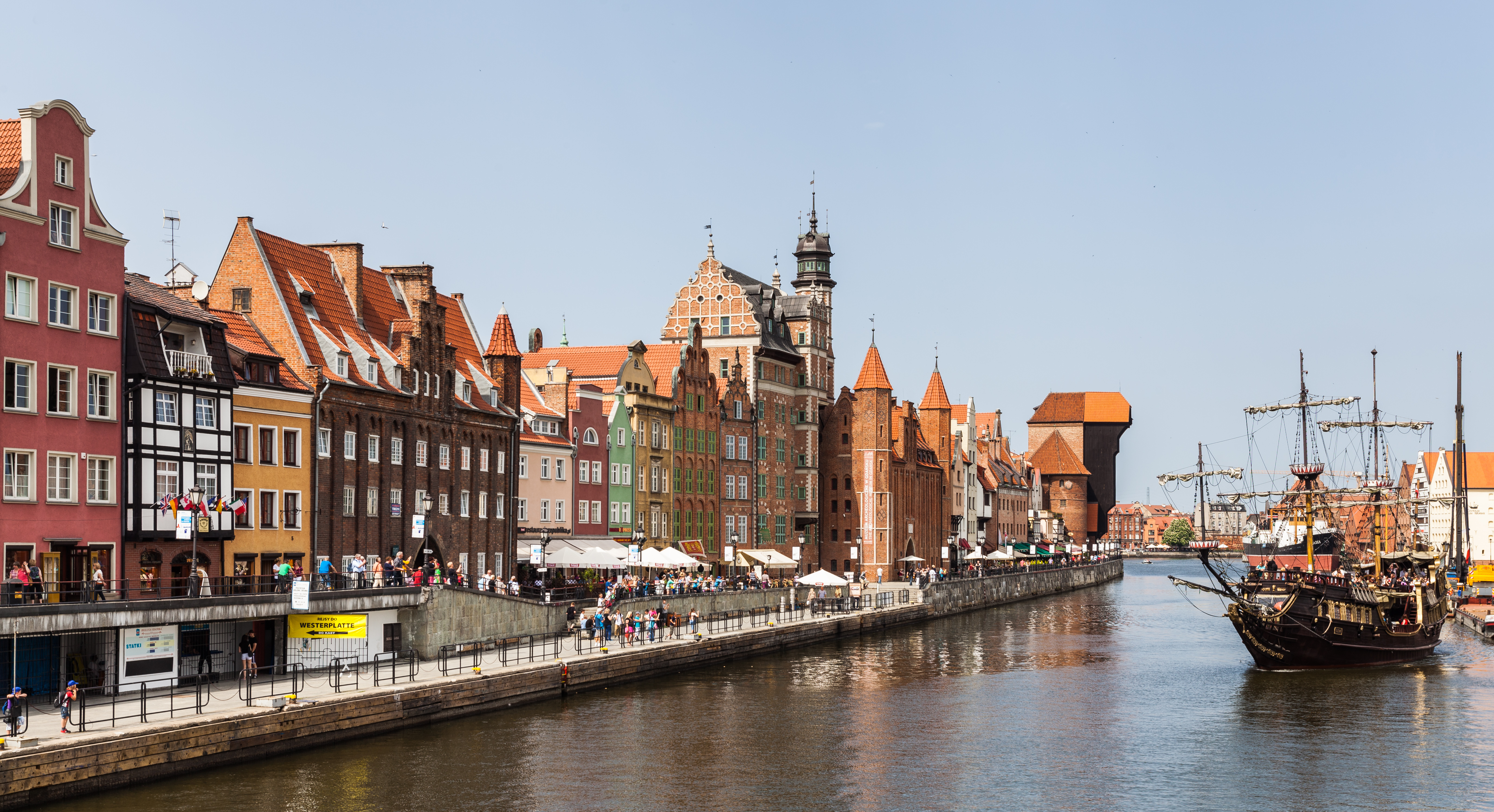
Baltic coast metro. Loads discharge at Gdańsk or Gdynia directly — same-day final mile is common.
- Transit
- 18–24 days
- 2-BR range
- $9,100 – $15,000
Origin lane: Port of NY/NJ → Gdańsk · direct

Wrocław · Lower Silesian Voivodeship
Silesian capital. Loads discharge at Gdynia (6 hours) or Hamburg/Koper (6 hours) depending on origin; similar transit either way.
- Transit
- 19–26 days
- 2-BR range
- $9,300 – $15,300
Origin lane: Port of NY/NJ → Gdynia · road to Wrocław
Primary U.S. → Poland entry points
Poland has two primary Baltic container gateways plus Warsaw for air freight. Gdynia and Gdańsk share most U.S.-origin household traffic.
| Entry point | Type | Notes |
|---|---|---|
| Port of Gdynia | Seaport | Major Polish container port. Handles direct U.S. East Coast rotations. |
| Port of Gdańsk | Seaport | Neighboring Gdynia and similarly equipped. Also operates the deep-water DCT terminal for larger vessels. |
| Port of Świnoujście-Szczecin | Seaport | Western Polish port near the German border; used for West-Poland destinations and select groupage. |
| Warsaw Chopin (WAW) / Katowice (KTW) | Airport | Primary Polish air-freight gateways. Transit 5–9 days at 3–5× ocean cost. |
Relocation timeline
Polish clearance is fast and reasonably priced — one of the more efficient European lanes for U.S.-origin shipments. Budget 10–12 weeks for residence documentation.
- 1
Confirm residency / visa status (10–12 weeks out)
Duty-free import of used household effects in Poland depends on proving you are establishing residence — a registration certificate, long-stay visa, employment contract, or returning-citizen status. Begin paperwork early; the customs benefit is tied to this proof, not to the shipment itself.
- 2
Prepare the Transfer-of-Residence file (6–8 weeks out)
Your destination agent assembles the ToR application: dated inventory with estimated values, passport copy, proof of prior residence abroad (>12 months), and proof of new address in Poland. In most EU states the file is submitted before arrival so clearance is pre-approved.
- 3
Book origin pickup + ocean/air freight (4–6 weeks out)
We confirm port pair (U.S. East Coast → Rotterdam, Hamburg, or Felixstowe is most efficient for Poland), container size (20-ft, 40-ft, or shared LCL), and final clearance office. Summer peak (June–August) compresses sailings; book early.
- 4
Pack to customs expectations (2–3 weeks out)
Crew labels every carton with contents and room. Wine, electronics-in-box, firearms, and other regulated items are segregated for inspection access. Items that cannot legally enter Poland are removed at origin rather than discovered at destination.
- 5
Ocean transit + European clearance
Transit from U.S. East Coast runs 12–18 days to Rotterdam/Hamburg/Felixstowe. Our destination partner files the cleared ToR paperwork on arrival; typical release is 3–7 business days after discharge, longer if the officer requests an onsite inspection.
- 6
Final delivery + unpacking
Once released, the load is trucked to your Poland address. We coordinate narrow-street access, elevator reservations, parking permits (common in European historic centers), and optional same-day unpack.
Frequently asked questions about moving to Poland
Short, answer-first responses to the questions we get most often.
- Is moving to Poland from the USA duty-free?
- Generally yes — used personal effects imported under the Transfer of Residence (ToR) framework are exempt from import duty and VAT, provided you (a) are establishing residence in Poland, (b) have owned and used the goods for at least 6–12 months, and (c) keep the goods for personal use for a holding period (commonly 12 months). New-in-box items, vehicles, alcohol, and tobacco are always assessed separately.
- How long does shipping to Poland take?
- Ocean transit from U.S. East Coast ports to North Sea / English Channel ports typically runs 12–18 days; Mediterranean destinations add another 4–7 days. Air freight of a few cartons can deliver in 5–9 days but costs 3–5× ocean freight. Customs clearance at destination typically adds 3–7 business days after discharge.
- Do I need to be present when my shipment clears customs?
- No — our destination partner in Poland acts on your behalf under a signed power of attorney. Your passport copy, residency proof, and inventory must already be on file. You should be reachable by phone in case a customs officer requests clarification on a specific line item.
- Can I ship a vehicle to Poland with my household goods?
- Sometimes. Poland-specific vehicle rules (emissions, homologation, age, left-hand vs right-hand drive) vary significantly and often make vehicle import impractical or uneconomic. We always quote vehicle import separately from household goods and confirm eligibility before booking.
- What items are restricted or prohibited?
- Firearms and ammunition require advance declaration and permits in almost every European country. Fresh produce, seeds, plants, and soil face EU agricultural restrictions. Large quantities of tobacco, alcohol, or the same new-in-box item are treated as commercial goods and attract duty. Ivory and CITES-listed products are prohibited.
- How much does a move to Poland typically cost?
- Most full-service household moves land in a wide band. A studio / 1-BR from a nearby U.S. port starts around $4,500–$7,000; a full 3-BR+ household can reach $16,000–$24,000 for continental European destinations, higher for Nordic or island lanes. Port pair and final-mile access are the biggest cost drivers.
- How far in advance should I book?
- Start residency / visa paperwork 10–12 weeks before your target move. Book origin pickup 4–6 weeks out. Peak season is May–August and December; secure a slot earlier if you need those windows. Brexit-era UK clearance in particular benefits from extra buffer.
- Do I need a PESEL before my shipment arrives?
- Ideally yes. The PESEL is quoted on the import declaration and is needed for almost every administrative step in Poland. Non-EU applicants usually receive the PESEL with the karta pobytu.
- Are there any rules about importing a car to Poland?
- Yes — used vehicles pay VAT (23%) and the Polish excise tax (akcyza) calculated by engine size. Emission and safety homologation are checked at registration. We always quote vehicles separately from household goods.
- What about Polish language on the inventory?
- We prepare the inventory bilingually (Polish + English). KAS accepts English on informal parts of the file, but line-item translations reduce the chance of clarification questions at the port.
Related pages
- All countries we serve →
- Moving to Germany →
- Moving to Austria →
- Moving to Sweden →
- International moving — service overview →
- Miami, FL movers (primary East Coast origin) →
Structured summary: U.S. → Poland household moves with KAS-approved Zgłoszenie przesiedleńcze clearance, bonded entry at Gdynia, Gdańsk, or Świnoujście, and final-mile delivery to Warsaw, Kraków, Gdańsk, and Wrocław.
Ready to plan your Poland move?
We’ll review your paperwork, confirm your entry point, and coordinate with our destination partner in Poland so the load clears cleanly.