
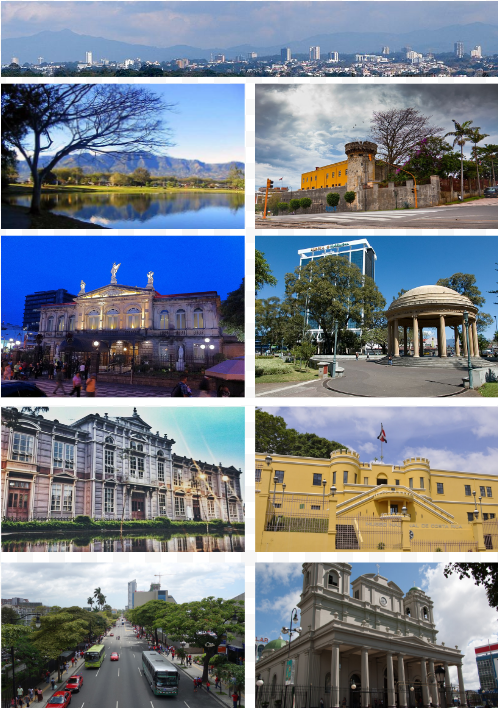
U.S. → Costa Rica relocation guide · updated 2026-04-23
Moving to Costa Rica from the United States
2026 guide to relocating from the United States to Costa Rica — required documents (Menaje Doméstico, DIMEX residency, Pensionado/Rentista visas), port entry (Limón, Caldera), transit times, and price ranges for San José, Heredia, Liberia, and Tamarindo.
At a glance
A standard U.S. → Costa Rica household move takes 18–30 days end-to-end, typically costs $4,500 – $19,500, and clears Costa Rican customs on the strength of the Menaje Doméstico inventory paired with residency status (Inversionista, Rentista, Pensionado, or Residente Temporal). Puerto Limón on the Caribbean handles most East-Coast-origin containers; Caldera on the Pacific covers West-Coast origins.
- Transit time
- 18–30 days
- Typical range
- $4.5K – $19.5K
- Main entry port
- Limón · Caldera
- Core document
- Menaje Doméstico
Documents required to move to Costa Rica
Costa Rica customs (Dirección General de Aduanas) clears household shipments against a clear paper trail. Missing or inaccurate documents are the single most common cause of delays at the port. Residency category determines whether your shipment clears duty-free.
- Required for every move
Menaje Doméstico (household inventory)
Itemized Spanish-language inventory of all household goods, signed by you and notarized. Not always consularized, but always required in original + copies.
- Required for residents
DIMEX card or residency resolution
DIMEX (cédula de residencia) or the formal residency approval resolution from Migración is required to claim duty-free menaje treatment. The exemption applies to a one-time inbound shipment within a defined window.
- Required for every move
Valid passport
Passport of the primary importer and their dependents. Entries in the migration system are cross-referenced to the residency file.
- Required for residents
Proof of residency status type
Pensionado (retirees with qualifying monthly income), Rentista (passive income), Inversionista (investor), or Residente Temporal (work/family). Each has specific exemption parameters.
- Required for every move
Bill of lading / air waybill
Carrier BOL matched to the Menaje line-by-line. Destination agent uses this to file the DUA (Declaración Única Aduanera).
- Required for every move
Declared-value inventory
Declared USD values per line item. Used personal effects are exempt from duty under menaje, but Aduanas uses declared values for warehouse and inspection fees.
- Conditional
Pet health certificates (if applicable)
For pets shipped alongside household goods: USDA endorsement + Costa Rican import permit through SENASA. Pets usually travel as cargo or accompanied baggage, not in the container.
Price ranges from the USA to major Costa Rica cities
Ranges below cover full-service door-to-door moves from a major U.S. port, including export packing, ocean freight, customs brokerage at destination, and final-mile delivery anywhere in Costa Rica. Quoted in USD. Actual quotes depend on volume, access, and seasonality — use these as planning bands.
| Destination city | Transit | Studio / 1-BR | 2-BR household | 3-BR+ household | Typical U.S. origin |
|---|---|---|---|---|---|
| San José(San José) | 18–25 days | $4,500 – $7,000 | $8,200 – $13,800 | $13,800 – $19,500 | Miami, FL · Port of Miami → Limón |
| Heredia(Heredia) | 19–26 days | $4,600 – $7,100 | $8,300 – $13,900 | $13,900 – $19,600 | Miami, FL · Limón |
| Liberia(Guanacaste) | 20–28 days | $4,700 – $7,300 | $8,500 – $14,100 | $14,000 – $19,800 | Los Angeles, CA · Caldera + Guanacaste final-mile |
| Tamarindo(Guanacaste) | 21–29 days | $4,900 – $7,500 | $8,800 – $14,400 | $14,400 – $20,200 | LA / Miami · Caldera or Limón + shuttle |
Estimates as of 2026-04-23. Add 10–15% for final-mile delivery to mountain or beach communities (Atenas, Escazú hills, Tamarindo, Jacó) where container access requires a shuttle truck.
Major Costa Rica destinations we serve
Costa Rica destinations fall into two clusters: the Central Valley (San José, Heredia, Alajuela) for corporate and retiree moves, and the Pacific beach communities (Tamarindo, Jacó, Nosara, Samara) for lifestyle relocations.
San José · San José
Capital metro — most professional, embassy, and retiree relocations target the Central Valley (San José, Escazú, Santa Ana). Inland by truck from Puerto Limón (~3.5 hours).
- Transit
- 18–25 days
- 2-BR range
- $8,200 – $13,800
Origin lane: Miami, FL · Port of Miami → Limón

Heredia · Heredia
Central Valley province adjacent to San José with heavy U.S. corporate presence (Intel, Amazon, HP). Same routing as San José.
- Transit
- 19–26 days
- 2-BR range
- $8,300 – $13,900
Origin lane: Miami, FL · Limón

Liberia · Guanacaste
Gateway to Guanacaste beaches (Tamarindo, Playa Flamingo, Nosara). Pacific origin moves route via Caldera; East-Coast moves cross country from Limón.
- Transit
- 20–28 days
- 2-BR range
- $8,500 – $14,100
Origin lane: Los Angeles, CA · Caldera + Guanacaste final-mile

Tamarindo · Guanacaste
Pacific-coast beach community with the largest concentration of U.S. expats. Container access is limited — shuttle required for most final deliveries.
- Transit
- 21–29 days
- 2-BR range
- $8,800 – $14,400
Origin lane: LA / Miami · Caldera or Limón + shuttle
Primary U.S. → Costa Rica entry points
Two seaports handle essentially all U.S.-origin household containers. East-Coast moves go through Puerto Limón (Caribbean); West-Coast moves through Caldera (Pacific).
| Entry point | Type | Notes |
|---|---|---|
| Puerto Limón / Moín | Seaport | Main Caribbean container port. Handles ~75% of U.S.-origin household moves. ~3.5 hours by truck to San José. |
| Puerto Caldera | Seaport | Pacific-coast port west of San José. Preferred for West-Coast U.S. origins (LA/Long Beach) and Guanacaste deliveries. |
| Juan Santamaría International Airport (SJO) | Airport | Air-freight option for unaccompanied baggage and small urgent shipments; rates run 3–5× ocean. |
| Daniel Oduber Intl Airport (LIR) | Airport | Liberia airport — handy for air-freight to Guanacaste avoiding the San José cross-country drive. |
Relocation timeline
Most delays come from the residency file, not the shipment. Confirm your DIMEX card is issued (or approval resolution is in hand) before the container sails.
- 1
Confirm your residency / visa category (8–12 weeks out)
Household-goods duty exemptions in Costa Rica are tied to your residency status. Apply at the Costa Rica consulate in the U.S. early — if the visa is not issued by the time your shipment is packed, the load will almost always incur duties or be held until the permit arrives.
- 2
Build the inventory (6–8 weeks out)
Work with your coordinator to itemize every carton and every piece of furniture. Electronics need serial numbers and declared values. The inventory is the primary document Costa Rica customs reviews at the port of entry.
- 3
Book origin pickup and ocean booking (4–6 weeks out)
We confirm the vessel, container type (20-ft, 40-ft, or shared LCL), and primary port of discharge in Costa Rica. Summer peak and year-end holidays both compress available sailings — book early whenever possible.
- 4
Pack to customs expectations (2–3 weeks out)
Crew labels every carton with contents and room. High-value items and any regulated goods (alcohol, firearms, electronics-in-box) are segregated for inspection access. Items that cannot legally enter the country are removed at origin.
- 5
Ocean transit + arrival clearance
The container sails; our destination partner pre-clears paperwork with Costa Rica customs before arrival so the shipment is released as quickly as possible after discharge. Typical on-dock review is 3–10 business days depending on port and season.
- 6
Final delivery and unpacking
Once released, the load is trucked to your address. We coordinate elevator reservations, stair access, and shuttle vehicles for narrow-street or historic-district deliveries. Same-day unpack is optional.
Frequently asked questions about moving to Costa Rica
Short, answer-first responses to the questions we get most often.
- Is moving to Costa Rica from the USA duty-free?
- Used personal effects are generally exempt from duty under the "menaje de casa" or equivalent settler category — provided you have the corresponding residency status and a properly prepared inventory. New-in-box items, vehicles, alcohol, and firearms are treated separately and usually attract duty.
- How long does shipping to Costa Rica take?
- Ocean transit depends on origin and port pairing. Most East Coast U.S. origins reach Central America in 12–20 days, northern South America in 18–30 days, and the Southern Cone in 28–45 days. Customs clearance typically adds 3–10 business days on top of transit.
- Do I need to be present when my shipment clears customs?
- No. Our destination partner in Costa Rica presents paperwork on your behalf under a signed authorization. You should be reachable by phone in case an officer requests clarification on a specific item.
- Can I ship a vehicle to Costa Rica with my household goods?
- Sometimes — but vehicle import rules vary by country and carry additional documentation, taxes, and age restrictions. We always quote vehicle import separately from household goods and confirm eligibility before booking.
- What items are restricted or prohibited?
- Firearms and ammunition always require advance declaration and in several countries cannot be imported by private individuals. Fresh produce, plants, seeds, and soil face agricultural restrictions. New-in-box electronics, pharmaceuticals, and bulk quantities of the same item are commonly flagged as commercial goods.
- How much does a move to Costa Rica typically cost?
- Most full-service household moves fall in a wide band: a studio can start around $4,000 from a nearby U.S. port; a 3-BR+ household to the far reaches of South America can exceed $25,000. Distance, port pair, and residency paperwork are the biggest cost drivers.
- How far in advance should I book?
- Start residency paperwork 8–12 weeks before your target move. Book origin pickup 4–6 weeks out. Peak season is May–August and December — secure a slot earlier if you need those windows.
- Does the Pensionado or Rentista residency give duty-free household import?
- Yes. All four primary residency categories (Pensionado, Rentista, Inversionista, Residente Temporal) qualify for a one-time duty-free household goods import. There are dollar-value caps on specific items — we review them with you during the inventory phase.
- Can I import my car with my household goods?
- Cars are imported separately from household goods and attract significant import duties (around 53–80% of CIF value depending on vehicle age and category) regardless of residency status. We quote vehicle moves as a distinct line item.
- How long does Aduanas clearance take at Limón?
- Typical clearance is 5–10 business days once the DUA is filed and the Menaje is presented. Peak season adds 2–4 days. We file pre-clearance while the vessel is still at sea to minimize demurrage.
Related pages
- All countries we serve →
- Moving to Panama →
- Moving to Nicaragua →
- International moving — service overview →
- Miami, FL movers →
- Houston, TX movers →
Structured summary: U.S. → Costa Rica household moves with DIMEX-backed Menaje Doméstico clearance at Puerto Limón or Caldera and delivery to San José, Escazú, and Guanacaste beach communities.
Ready to plan your Costa Rica move?
We’ll review your paperwork, confirm your entry point, and coordinate with our destination partner in Costa Rica so the load clears cleanly.