

U.S. → Colombia relocation guide · updated 2026-04-23
Moving to Colombia from the United States
2026 guide to relocating from the United States to Colombia — required documents (Menaje Doméstico, Migrante M visa, cédula de extranjería), port entry (Cartagena, Barranquilla, Buenaventura), transit times, and price ranges for Bogotá, Medellín, Cartagena, and Cali.
At a glance
A standard U.S. → Colombia household move takes 22–36 days end-to-end, typically costs $4,800 – $20,500, and clears Colombian customs (DIAN) on the strength of the Menaje Doméstico inventory paired with a Migrante, Residente, or Visitante V visa. Cartagena and Barranquilla handle most East-Coast-origin containers; Buenaventura on the Pacific covers West-Coast origins.
- Transit time
- 22–36 days
- Typical range
- $4.8K – $20.5K
- Main entry port
- Cartagena · Barranquilla
- Core document
- Menaje Doméstico
Documents required to move to Colombia
Colombia customs (DIAN · Dirección de Impuestos y Aduanas Nacionales) clears household shipments against a clear paper trail. Missing or inaccurate documents are the single most common cause of delays at the port. Residency category determines whether your shipment clears duty-free.
- Required for every move
Menaje Doméstico (household inventory)
Spanish-language itemized inventory. Used household goods owned more than 12 months qualify for duty-free treatment under the menaje de casa import category.
- Required for residents
Migrante (M) or Resident (R) visa
Visa type drives exemption eligibility. Migrante (M) with at least 2 years and Residente (R) qualify for the one-time duty-free menaje import. Visitante (V) visas have restricted eligibility.
- Required for residents
Cédula de Extranjería
Colombian foreigner ID card issued by Migración Colombia within 15 days of entry under a valid visa. Required for DIAN clearance.
- Required for every move
Valid passport with Colombian visa stamp
Passport and visa page are scanned and filed with the clearance. Entry stamp must be present before DIAN will release the shipment.
- Required for every move
Bill of lading / air waybill
Original BOL matched to the Menaje. Our destination agent uses it to file the Declaración de Importación.
- Conditional
Registro Único Tributario (RUT)
Foreign tax ID required for most import filings. DIAN accepts a RUT generated under the cédula de extranjería. Our destination partner handles the RUT registration when you arrive.
- Required for every move
Declared-value inventory in USD
Line-by-line values. DIAN uses declared values for warehouse and inspection fees even on duty-free shipments.
Price ranges from the USA to major Colombia cities
Ranges below cover full-service door-to-door moves from a major U.S. port, including export packing, ocean freight, customs brokerage at destination, and final-mile delivery anywhere in Colombia. Quoted in USD. Actual quotes depend on volume, access, and seasonality — use these as planning bands.
| Destination city | Transit | Studio / 1-BR | 2-BR household | 3-BR+ household | Typical U.S. origin |
|---|---|---|---|---|---|
| Bogotá(Distrito Capital) | 24–32 days | $4,800 – $7,400 | $8,800 – $14,500 | $14,500 – $20,500 | Miami, FL · Port of Miami → Cartagena → inland |
| Medellín(Antioquia) | 25–33 days | $4,900 – $7,600 | $9,000 – $14,800 | $14,800 – $20,800 | Houston, TX · Cartagena + 12 hour inland |
| Cartagena(Bolívar) | 22–28 days | $4,600 – $7,100 | $8,400 – $13,900 | $13,900 – $19,500 | Miami, FL · Port of Miami → Cartagena direct |
| Cali(Valle del Cauca) | 24–34 days | $4,900 – $7,500 | $9,000 – $14,800 | $14,800 – $20,700 | Los Angeles, CA · Buenaventura + 4 hour truck |
Estimates as of 2026-04-23. Add 10–15% for narrow-street delivery in Cartagena's walled Centro Histórico or Medellín's Poblado hillside neighborhoods.
Major Colombia destinations we serve
Colombia destinations split between the Caribbean coast (Cartagena, Barranquilla, Santa Marta), the Andean interior (Bogotá, Medellín), and the Pacific side (Cali via Buenaventura).
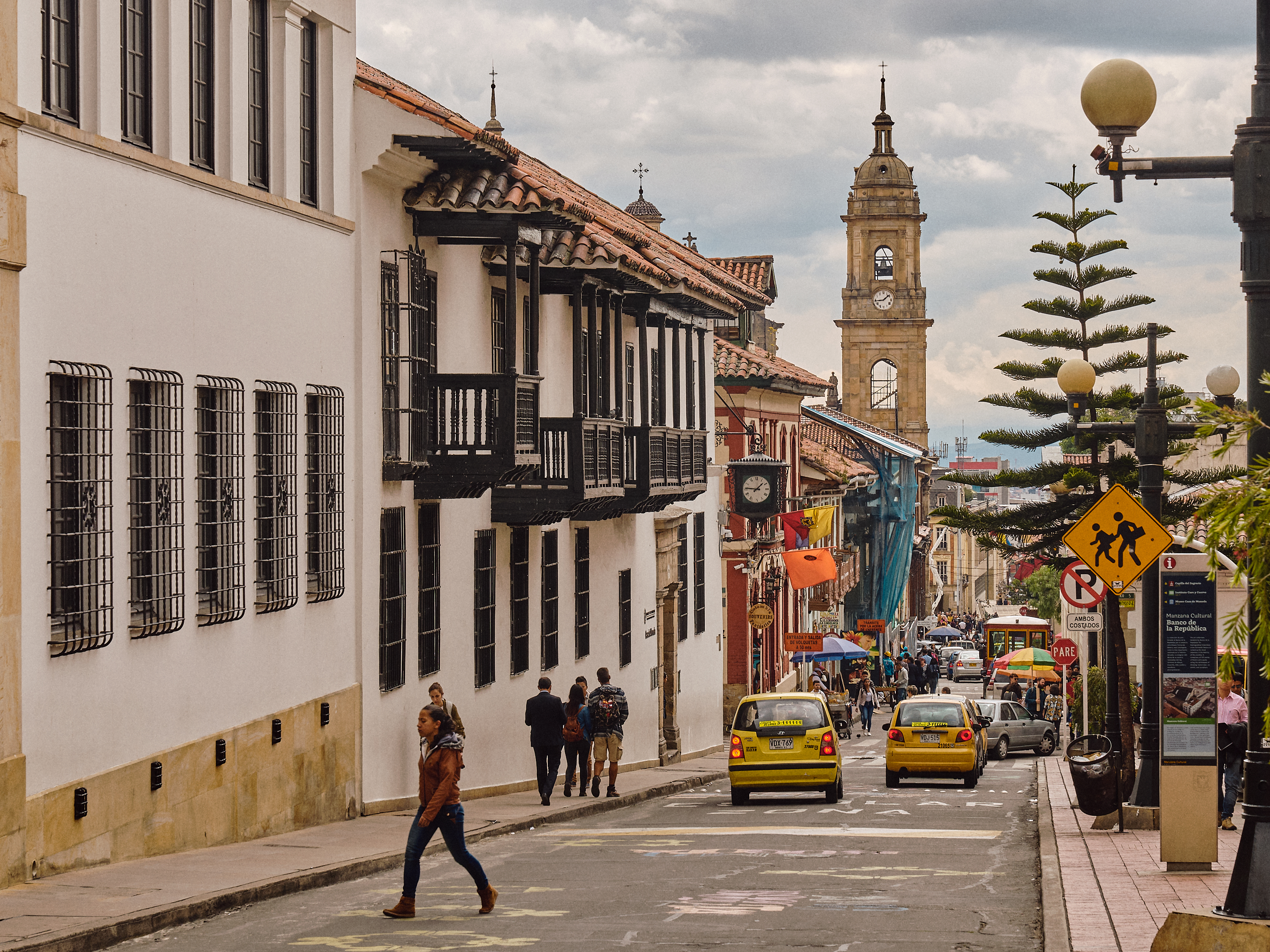
Bogotá · Distrito Capital
Capital metro and the largest destination for professional and diplomatic moves. Loads truck up from Cartagena (~18 hours) or Barranquilla.
- Transit
- 24–32 days
- 2-BR range
- $8,800 – $14,500
Origin lane: Miami, FL · Port of Miami → Cartagena → inland

Medellín · Antioquia
Popular relocation target for U.S. remote workers and retirees. El Poblado and Laureles neighborhoods handle most expat volume.
- Transit
- 25–33 days
- 2-BR range
- $9,000 – $14,800
Origin lane: Houston, TX · Cartagena + 12 hour inland
Cartagena · Bolívar
Caribbean port city with a growing U.S. retiree and remote-worker community. Shortest final-mile from the main container port.
- Transit
- 22–28 days
- 2-BR range
- $8,400 – $13,900
Origin lane: Miami, FL · Port of Miami → Cartagena direct

Cali · Valle del Cauca
Colombia's third-largest city. Moves route through Buenaventura on the Pacific — the shorter port routing for West-Coast U.S. origins.
- Transit
- 24–34 days
- 2-BR range
- $9,000 – $14,800
Origin lane: Los Angeles, CA · Buenaventura + 4 hour truck
Primary U.S. → Colombia entry points
Cartagena is Colombia's largest container port and handles most U.S.-origin household freight. Buenaventura is the Pacific alternative for West-Coast origins.
| Entry point | Type | Notes |
|---|---|---|
| Cartagena (SPRC / Contecar) | Seaport | Largest container port in Colombia. Handles most East-Coast U.S. origin moves. Inland truck to Bogotá (~18 hours) or Medellín (~12 hours). |
| Barranquilla | Seaport | Caribbean alternative to Cartagena. Slightly shorter road route to the Andean cities. |
| Buenaventura | Seaport | Main Pacific port. Preferred routing for West-Coast U.S. origins (LA/Long Beach). |
| El Dorado Int'l Airport (BOG) | Airport | Primary air-freight port. Used for unaccompanied baggage and urgent shipments. |
Relocation timeline
Colombian customs is paperwork-heavy but predictable. The cédula de extranjería timing is the most common scheduling bottleneck — your visa holder must be in-country to obtain it.
- 1
Confirm your residency / visa category (8–12 weeks out)
Household-goods duty exemptions in Colombia are tied to your residency status. Apply at the Colombia consulate in the U.S. early — if the visa is not issued by the time your shipment is packed, the load will almost always incur duties or be held until the permit arrives.
- 2
Build the inventory (6–8 weeks out)
Work with your coordinator to itemize every carton and every piece of furniture. Electronics need serial numbers and declared values. The inventory is the primary document Colombia customs reviews at the port of entry.
- 3
Book origin pickup and ocean booking (4–6 weeks out)
We confirm the vessel, container type (20-ft, 40-ft, or shared LCL), and primary port of discharge in Colombia. Summer peak and year-end holidays both compress available sailings — book early whenever possible.
- 4
Pack to customs expectations (2–3 weeks out)
Crew labels every carton with contents and room. High-value items and any regulated goods (alcohol, firearms, electronics-in-box) are segregated for inspection access. Items that cannot legally enter the country are removed at origin.
- 5
Ocean transit + arrival clearance
The container sails; our destination partner pre-clears paperwork with Colombia customs before arrival so the shipment is released as quickly as possible after discharge. Typical on-dock review is 3–10 business days depending on port and season.
- 6
Final delivery and unpacking
Once released, the load is trucked to your address. We coordinate elevator reservations, stair access, and shuttle vehicles for narrow-street or historic-district deliveries. Same-day unpack is optional.
Frequently asked questions about moving to Colombia
Short, answer-first responses to the questions we get most often.
- Is moving to Colombia from the USA duty-free?
- Used personal effects are generally exempt from duty under the "menaje de casa" or equivalent settler category — provided you have the corresponding residency status and a properly prepared inventory. New-in-box items, vehicles, alcohol, and firearms are treated separately and usually attract duty.
- How long does shipping to Colombia take?
- Ocean transit depends on origin and port pairing. Most East Coast U.S. origins reach Central America in 12–20 days, northern South America in 18–30 days, and the Southern Cone in 28–45 days. Customs clearance typically adds 3–10 business days on top of transit.
- Do I need to be present when my shipment clears customs?
- No. Our destination partner in Colombia presents paperwork on your behalf under a signed authorization. You should be reachable by phone in case an officer requests clarification on a specific item.
- Can I ship a vehicle to Colombia with my household goods?
- Sometimes — but vehicle import rules vary by country and carry additional documentation, taxes, and age restrictions. We always quote vehicle import separately from household goods and confirm eligibility before booking.
- What items are restricted or prohibited?
- Firearms and ammunition always require advance declaration and in several countries cannot be imported by private individuals. Fresh produce, plants, seeds, and soil face agricultural restrictions. New-in-box electronics, pharmaceuticals, and bulk quantities of the same item are commonly flagged as commercial goods.
- How much does a move to Colombia typically cost?
- Most full-service household moves fall in a wide band: a studio can start around $4,000 from a nearby U.S. port; a 3-BR+ household to the far reaches of South America can exceed $25,000. Distance, port pair, and residency paperwork are the biggest cost drivers.
- How far in advance should I book?
- Start residency paperwork 8–12 weeks before your target move. Book origin pickup 4–6 weeks out. Peak season is May–August and December — secure a slot earlier if you need those windows.
- Do I need the Migrante (M) visa before my shipment arrives?
- Yes — DIAN will not release the menaje exemption without the visa in hand and the cédula de extranjería in process. If your shipment arrives early, we can bond it in the port warehouse for up to 30 days while the paperwork catches up.
- Can I import electronics duty-free?
- Used electronics included in a menaje household inventory generally qualify. Large quantities of the same item (e.g., four laptops, three TVs) are treated as commercial goods and attract duty plus 19% IVA.
- How long does DIAN clearance take at Cartagena?
- Typical window is 7–14 business days from container discharge. Peak season (December) and pre-clearance paperwork quality both heavily influence this. Our destination agent files the Declaración de Importación while the vessel is en route.
Related pages
- All countries we serve →
- Moving to Panama →
- Moving to Peru →
- International moving — service overview →
- Miami, FL movers (primary origin) →
- Houston, TX movers →
Structured summary: U.S. → Colombia household moves with DIAN clearance at Cartagena, Barranquilla, or Buenaventura, Migrante M visa and cédula de extranjería coordination, and delivery to Bogotá, Medellín, and Cartagena.
Ready to plan your Colombia move?
We’ll review your paperwork, confirm your entry point, and coordinate with our destination partner in Colombia so the load clears cleanly.